Migratory Waterfowl: A Field Guide for Photographers
Canada functions as a critical staging and breeding ground for an estimated 40 million ducks, geese, and swans each year. The four North American flyways converge on this geography in ways that make certain locations and specific windows of time far more productive than others for photography.
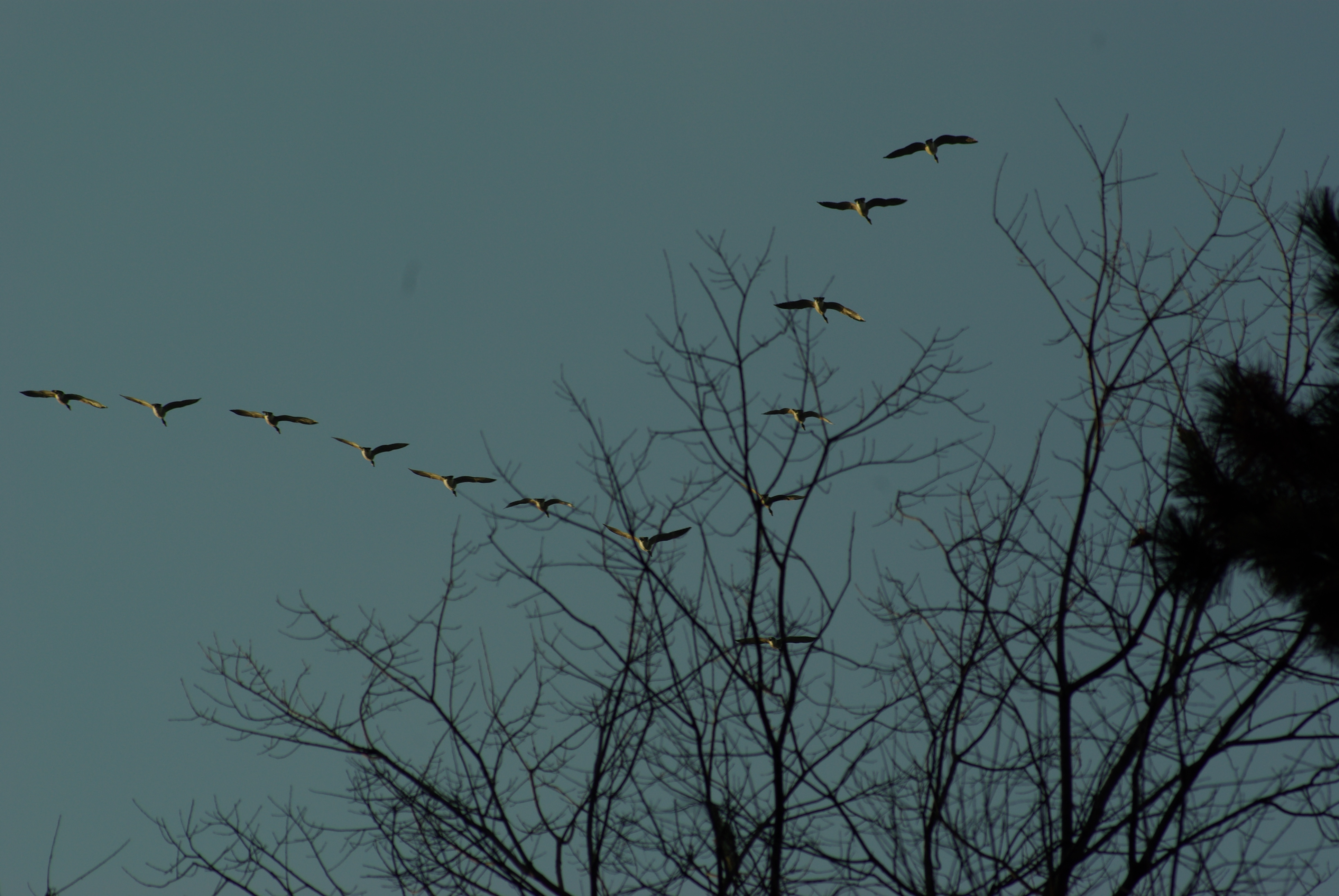
Understanding the flyway system
The Atlantic, Mississippi, Central, and Pacific flyways are not fixed corridors but generalised movement zones that describe where the majority of each species concentrates during spring and fall migration. Canada contributes to all four. The Prairie Pothole Region — a basin-and-wetland complex spanning Saskatchewan, Manitoba, and Alberta — is the most productive waterfowl breeding habitat on earth. An estimated 50–80% of North America's dabbling duck population breeds there in any given year.
For photographers, the practical implication is this: during spring (April–May) and fall (September–October), prairie wetlands hold extraordinary concentrations of ducks and geese in transit. Mallards, pintails, canvasbacks, lesser scaup, and multiple goose species stage in groups that can number in the hundreds of thousands at peak stopover sites such as Last Mountain Lake in Saskatchewan and Oak Hammock Marsh in Manitoba.
Flyway and migration data are maintained publicly by Ducks Unlimited Canada and the Environment and Climate Change Canada waterfowl monitoring program.
Key locations across Canada
Last Mountain Lake, Saskatchewan
Canada's oldest bird sanctuary and a staging area for sandhill cranes, snow geese, and numerous duck species during September and October. The lake's shallow northern basin concentrates birds when water levels are appropriate. Dawn flights off the roost — snow geese lifting en masse from the water — are among the most documented waterfowl spectacles in North America.
Access is from the town of Lumsden or from Highway 20 north. The federally managed Canadian Wildlife Service refuge on the western shore provides viewing platforms, though serious photography typically requires roadside setups along the eastern agricultural fields where birds feed.
Oak Hammock Marsh, Manitoba
A restored prairie wetland north of Winnipeg managed by Ducks Unlimited Canada and Manitoba Conservation. Spring migration here runs from late April through late May and produces consistent sightings of blue-winged teal, northern shoveler, and American avocet. The marsh's network of dikes provides access by foot, which allows positioning along roost edges at dawn and dusk without a boat.
Boundary Bay, British Columbia
The intertidal mudflats of Boundary Bay south of Vancouver hold one of the highest concentrations of overwintering shorebirds and waterfowl on the Pacific coast. Dunlin flocks numbering in the tens of thousands perform coordinated aerial manoeuvres over the bay during tidal cycles. The photography timing is tide-dependent: incoming tides compress shorebirds onto the upper marsh edge, bringing them within telephoto range.
Cape St. Mary's, Newfoundland
While primarily a seabird colony, Cape St. Mary's is included here for the northern gannet population, which at approximately 24,000 nesting pairs is the most accessible gannet colony in North America. Gannets are not waterfowl in the strict taxonomic sense, but their plunge-diving behaviour and colonial breeding make them a reasonable inclusion in any discussion of Canada's concentrated waterbird photography.
Camera settings for flight photography
Waterfowl in active flight present a different challenge than perched or swimming birds. The movement is rapid, often unpredictable in direction, and the background is frequently high-contrast sky or reflective water.
Shutter speed
The minimum shutter speed for sharp waterfowl in flight varies by species. A Canada goose with its slower wingbeat can be frozen at 1/1000s; a teal or dunlin at full speed requires 1/2000s or faster. When shooting into low-angle morning light, the tradeoff between shutter speed and exposure is real. Underexposing by one stop and recovering in raw processing is preferable to a soft frame from an insufficient shutter speed.
Autofocus
Bird-eye detection autofocus on modern mirrorless cameras functions well when the bird is isolated against a clean background. It struggles when multiple birds overlap or when a bird flies against a matching-toned sky. For mixed-flock scenarios — a raft of ducks exploding off the water — setting a wide zone and tracking the nearest subject rather than letting the camera select produces more reliable results.
For predictive work (birds coming off a known roost at dawn), pre-focus on a fixed point slightly ahead of the expected flight path and use continuous AF from that starting point. This eliminates the initial seek delay.
Lens choice
400mm is the practical minimum for waterfowl in flight at typical working distances. A 100–500mm zoom is more flexible than a prime if the flock behaviour is unpredictable. For mass-flight spectacles — snow geese or sandhill cranes in large numbers — a 300mm or even a 200mm wide frame can convey scale better than tight cropping with a longer lens.
Ethical fieldwork at wetland sites
Staging waterfowl are accumulating energy for migration or breeding. Any disturbance that causes a flock to flush burns calories that are difficult to replace. At managed sites like Oak Hammock Marsh, stay on designated paths and observe from established hides. At unmanaged prairie potholes, approach slowly from a vehicle where possible — birds habituate to vehicles far faster than to pedestrian figures — and do not park between a flock and its water access route.
Nest disturbance of any migratory bird, including waterfowl, is governed by the Migratory Birds Convention Act in Canada. Duck nests are not always immediately visible; walking through tall grass in prairie pothole terrain during May and June carries a non-trivial risk of stepping on nests.
When to go: a month-by-month summary
- March–April: Early migrants arrive on prairie potholes; open leads on Lake Erie and Lake Ontario hold diving ducks
- May: Peak breeding activity on the prairies; duck pairs on every pothole, shorebird migration through southern Manitoba and Saskatchewan
- June–July: Broods visible on wetlands; limited migration activity; seabird colonies in Newfoundland and the Gulf of St. Lawrence at maximum activity
- August–September: Shorebird southward migration begins; teal and early geese moving through prairies by late August
- October: Peak staging on prairie wetlands; large goose and crane aggregations at Last Mountain Lake and similar sites
- November–December: Open-water concentrations on Great Lakes; Boundary Bay tidal flats at peak shorebird and waterfowl density